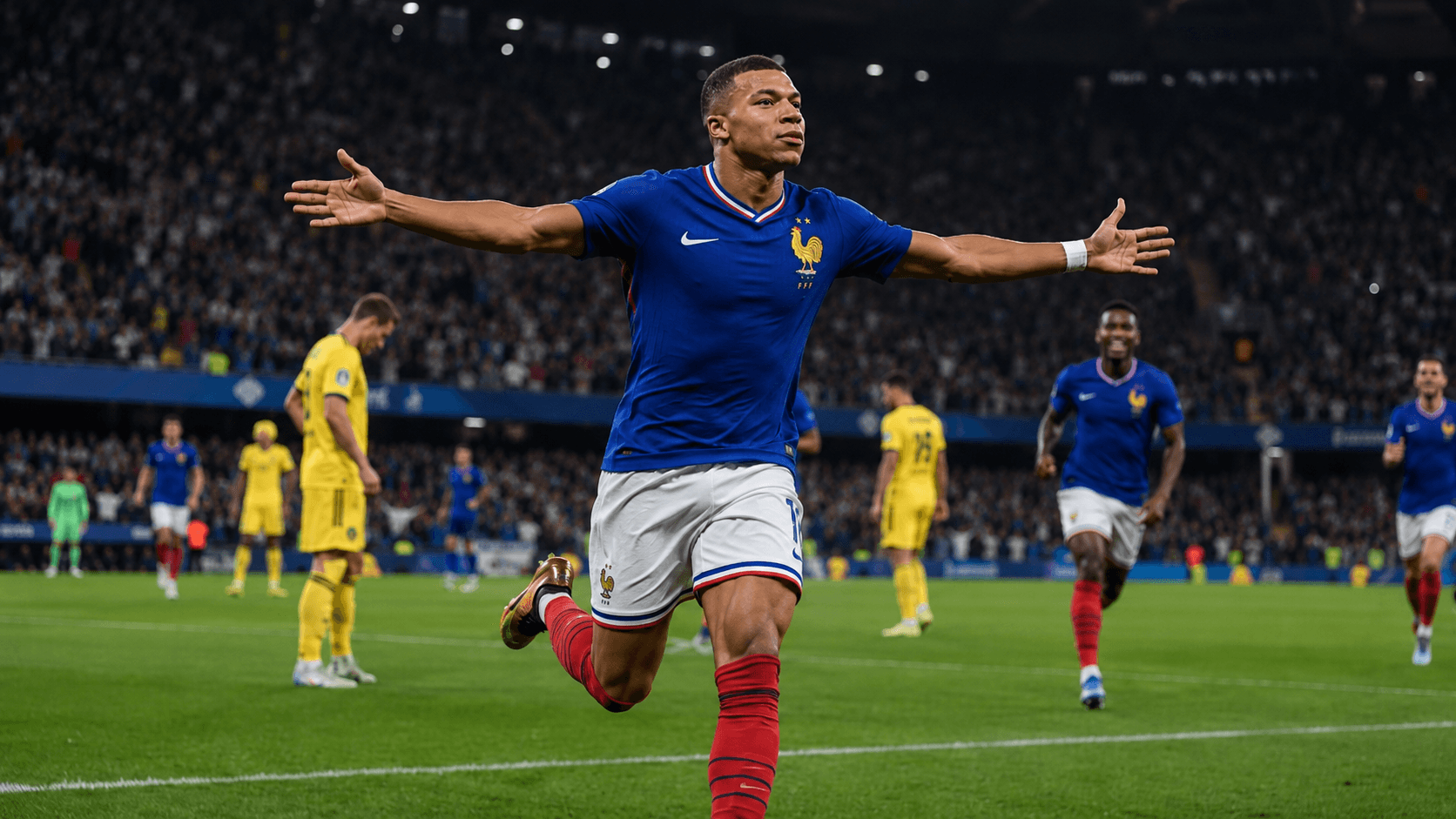
The World Cup has reached its final four, and this is the heavyweight line-up the tournament promised. France face Spain, while England meet Argentina, with the world’s elite now separated by only two matches from football’s greatest prize. The semi-final schedule has France against Spain on Tuesday, July 14, and England against Argentina on Wednesday, July 15.
What makes this semi-final stage fascinating is not just the quality of the teams involved. It is the contrast between them. The four remaining sides are among the highest-ranked nations in world football, but they do not attack in the same way. France look explosive and vertical. Spain want control. England mix structure with individual power. Argentina still lean on rhythm, timing and emotional intelligence around Lionel Messi.
France: The devastating transition machine
France may be the most frightening team left because they do not need long spells of possession to hurt opponents. Their attacking threat is built on speed, spacing and ruthlessness. Once the ball turns over, they can move from their own half to the opposition penalty area in seconds.
That is why Spain’s midfield control will be so important in the first semi-final. Reuters reported that Spain are preparing to dominate possession partly to limit France’s attacking weapons, including Kylian Mbappe, Michael Olise, Ousmane Dembele and one of Desire Doue or Bradley Barcola.
France’s danger comes from the way those forwards stretch a defence. Mbappe can attack the left channel, Dembele can isolate defenders wide, and Olise offers the extra layer of invention between the lines. If opponents lose the ball with too many players ahead of it, France can punish them immediately.
Their attacking style is not always about volume. It is about the quality of the moment. One loose pass, one failed counter-press, one defender stepping too early — that can be enough.
Spain: Control, patience and the slow squeeze
Spain are almost the opposite. Their attack is not built on chaos. It is built on control.
They want the ball, they want the rhythm, and they want opponents to spend long periods defending without relief. Their best attacking moments often come after they have moved a team from side to side until one gap appears. Then the pass arrives, the winger receives, the full-back overlaps, and suddenly a patient move becomes a clear chance.
Rodri’s leadership has become central to that identity. In an interview with The Guardian, the Spain captain spoke about the team’s growth, the importance of unity and the maturity of Lamine Yamal, who has carried major expectation during the tournament.
Spain’s attack is not just technical; it is psychological. They make opponents chase, wait, shift and suffer. Against France, that patience could be their best form of defence. If Spain control the ball well enough, France’s forwards may spend more time waiting than running.
But that comes with a danger. One mistake in midfield against France can become a goal at the other end.
England: Power, set pieces and decisive individuals
England’s route to goal is different again. They are not as possession-heavy as Spain and not as naturally explosive as France, but they carry a blend of physicality, set-piece threat and big-moment players.
The quarter-final win over Norway showed that England can survive difficult spells and still find a way through. The current semi-final draw places them against Argentina after a 2-1 win over Norway, while Argentina reached the last four by beating Switzerland 3-1.
England’s attack is built around presence. Harry Kane gives them a focal point, Jude Bellingham attacks the penalty area from midfield, and their wide players can stretch the pitch when games open up. They can score from crosses, second balls, set pieces and late midfield runs.
That makes England difficult to read. They can look controlled for long spells, then suddenly become direct. They can go through Kane’s feet, or use Bellingham’s timing, or lean on pressure around the box.
Their biggest challenge against Argentina will be tempo. If England allow the game to become too slow and emotional, Argentina will enjoy it. If they make it physical and fast, they can force Argentina into uncomfortable defensive situations.
Argentina: Rhythm, experience and the Messi factor
Argentina are the most experienced attacking unit left. They do not always need to dominate territory. They need the game to fall into their rhythm.
Their attack remains heavily shaped by Messi’s presence, even when others provide the running and pressing around him. Argentina’s danger is often in the pause before the pass. They wait for defenders to move, then exploit the space that movement creates.
They can also make matches feel uncomfortable. Argentina are masters at breaking rhythm, winning fouls, slowing momentum and then accelerating through one moment of quality. Their attack is as much about game management as it is about chance creation.
Against England, that could be decisive. England may have more physical power, but Argentina have the experience to turn a semi-final into a test of patience. If Messi finds space between the lines, England’s midfield and centre-backs will have to decide whether to step out or hold shape. Either choice carries risk.
The tactical story of the semi-finals
France vs Spain is a clash between speed and control. Spain will try to take the air out of the game by keeping the ball. France will wait for the moment to explode into space.
England vs Argentina is a clash between power and rhythm. England will want to impose their physical presence and push Argentina backwards. Argentina will want to control the emotional temperature of the match and create openings through timing and intelligence.
That is what makes this final four so compelling. These are not just four big nations with elite players. They are four different answers to the same question: how do you score goals at the highest level?
France answer with pace. Spain answer with possession. England answer with force and moments. Argentina answer with craft.
Only one approach will survive the week.
The Final Third verdict
This World Cup semi-final stage feels like a tactical showcase. There is no single correct way to attack. The tournament’s four strongest teams have arrived here through different identities, and that is exactly what makes the next two matches so intriguing.
France may have the most devastating forwards. Spain may have the clearest collective structure. England may have the best blend of physicality and late-game threat. Argentina may have the deepest understanding of how to manage a knockout match.
The margins will be tiny. But the team that imposes its attacking identity, rather than reacting to the opponent’s, will be the one that reaches the final.